
40 pages.
30 minutes.
29 dollars.
One decision.
PayPal, card, or Apple Pay · instant

The stuck feeling
You know the route before you set off.
The argument at breakfast runs the way it ran last month. The reply you compose at three in the morning arrives at the same last sentence. You can see the next four stops from here, and you are still on board.
That is what a track does. A train of thought is efficient precisely because it asks you nothing at every junction. It carries you. It carries you past the point where you wanted to get off.

By evening it has a timetable of its own, and arguing with it costs more than the thing you were thinking about.A thought that circles for an hour stops being a thought and becomes a conviction.
The mechanism
What a Thought Taxi is
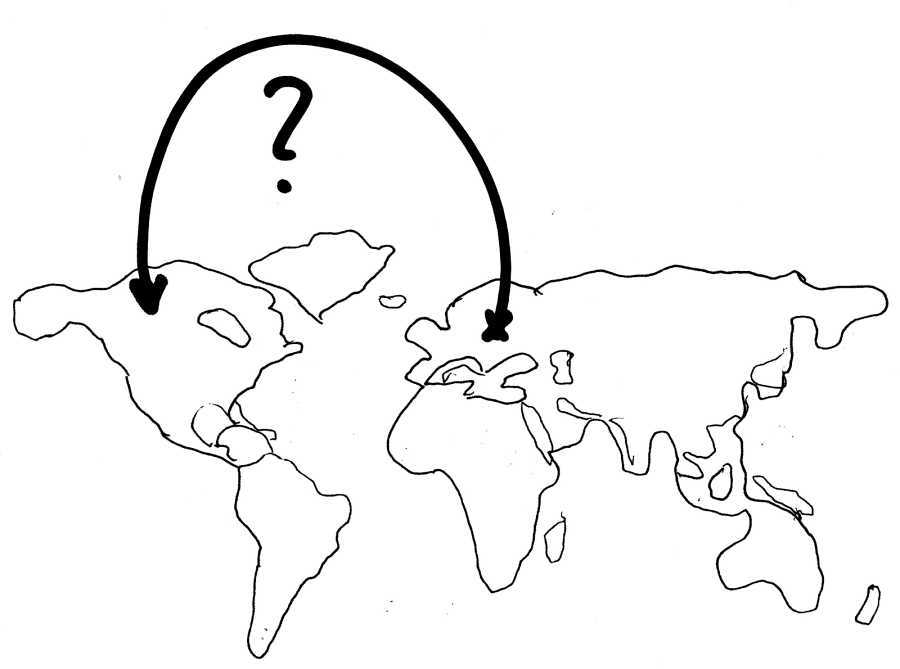
A taxi has no rails. It comes when you call it. It goes where you say, and it stops when you say. That is the whole model, and the model is the book.
Nothing to install, nothing to remember, no breathing exercise. It is a way of noticing that you are on a track, and a way of getting off that takes seconds rather than a season.
Why speed produces calm
Most advice tells you to slow down and sit with the thought. Sitting with a circling thought is how the circle gets worn deeper. The Thought Taxi goes the other way: leave early, arrive somewhere else, get on with the afternoon. Getting out of a thought after ten seconds costs almost nothing. Getting out after two days costs a weekend and, often, a relationship's worth of goodwill.
Calm here is what is left over once the circling stops.

What is inside
Four things, worked through with examples.
And with drawings I made myself, which is the other reason it reads as quickly as it does.
-
The "would" that prevents change
"I would, if only." The sentence sounds like a plan and works like a brake. It keeps the intention alive and the movement at zero. You will learn to hear it in your own speech, which is the difficult half.
-
Why changing everything guarantees changing nothing
The total overhaul is the most reliable way to stay exactly where you are. It is too big to start on a Tuesday. One short ride, actually taken, beats a programme that begins next month.
-
Exits from thought roundabouts
Some thoughts go around rather than forward. A roundabout has exits. The work is leaving before you have won the lap.
-
Getting out of an escalation before it escalates
Escalations announce themselves. There is a moment, usually early, when the next sentence is still yours to choose. The book is about recognising that moment and about what to do with the two seconds it gives you.
PayPal, card, or Apple Pay · instant

A thought you are ready to leave is the only kind this book can move. Everything else needs a different afternoon.The book opens by telling readers who do not want to change anything to put it down and give it away.
Fit
Who it is for, and who it is not for.
Read it if
- You keep arriving at the same conclusion and would like a different stop.
- You want a thought model you can use this afternoon.
- You are willing to change one small thing rather than announce a new life.
- You would rather read 40 pages carefully than 300 pages quickly.
- You are curious how a systemic therapist thinks, without wanting therapy.
Do not read it if
- You do not want anything to change. The book says this on its first page and tells you to put it down and give it to someone else. It means it.
- You are in an acute crisis. This is a book. Please speak to a doctor, a therapist, or the emergency services in your country.
- You want a workbook, a 12-week system, an app or a daily habit tracker. None of that is in here.
- You judge a book by its page count. You will feel short-changed, and you will be right by your own measure.
- You need to see reviews before you buy. The English edition is new and has none yet. I would rather say so than invent them.
Who wrote it

Johannes Faupel
Systemic therapist and counsellor (SG), trained at the IGST, in practice in Frankfurt.
Before that, twenty years as a specialist journalist. That is where the material comes from. I sat in on conversations for a living and watched communication break down at close range, over and over, usually long before anybody in the room noticed it was breaking.
The drawings are mine as well. Pen on paper, and there are enough of them that the book reads in half an hour.
On the price
$29 is a fraction of one therapy hour, and a therapy hour is where this material would otherwise reach you – slowly, and only if you booked one. This is the part of that hour you can take home and keep.
The other comparison is time. Reaching the same idea through a 300-page business book costs half a day. Measure it in time to a usable idea.
The book
One book. One price. No bundle.

Thought Taxi by Johannes Faupel. 40 pages, illustrated, about 30 minutes to read. The English edition of Gedankentaxi, Exponere Publishing, Frankfurt.
PayPal, card, or Apple Pay · instant
- Charged as exponere-Verlag
- Sent by email after payment, usually within a few hours, always within 24
- 14 days, full refund, no questions asked
- Price includes VAT where applicable
Questions
The six that come up.
Is this just positive thinking?
Positive thinking asks you to feel differently about the same journey. It leaves the track where it is and works on your face. The Thought Taxi changes the route. When a thought heads somewhere you would rather avoid, the fix is a different road.
Is 40 pages too short?
Brevity is the product. The book argues that markedly less produces markedly more effect, and a long book would be exactly the mountain it warns against. It is called Thought Taxi, not Total Permanent Revolution of Thought.
You can read it in about half an hour and use it the same afternoon. Getting to the same idea through a 300-page business book costs half a day and usually ends with a highlighted chapter you never return to. Time to a usable idea is the measure that matters.
Do I need any experience with therapy?
None. There is no jargon to learn and nothing to have read first. The examples are ordinary conversations: at the kitchen table, in a meeting, on the phone at an awkward hour.
What do I actually get, and in what format?
The complete 40-page book with all the illustrations, as a PDF, sent to the email address you use at checkout. Usually within a few hours, always within 24. No account, no login, no reading app.
What if it is not for me?
Write to me within 14 days and you get the full amount back. No questions, no form, no reason required. The book itself opens by telling readers who do not want to change anything to put it down and give it away – it would be odd to be stricter about the refund than about the reading.
Is there a German edition?
Yes. Gedankentaxi, published by Exponere Publishing in Frankfurt, ISBN 978-3-944714-02-8. Thought Taxi is the English edition of that book.